Home & Contents
Alternative Accommodation Cover And How Long It Lasts
When a home becomes uninhabitable, the policy pays for somewhere else to live, but the benefit is bounded by time, money and a comparison with your normal costs.

When damage makes a home uninhabitable, a policy will usually pay for somewhere else to live. The benefit is real, and it is bounded in three separate ways.
The trigger is habitability, not damage
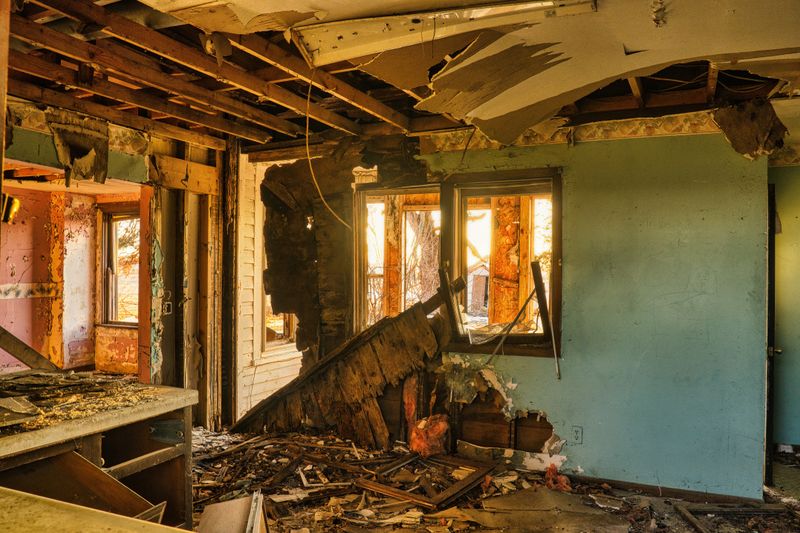
The clause responds when the property cannot reasonably be lived in as a result of an insured event. Serious damage that still leaves the home usable does not trigger it.
Habitability is judged on practical criteria: whether the property is safe, weatherproof, and has working sanitation, heating and cooking facilities. Discomfort alone is not the test.
The assessment is normally made by the loss adjuster rather than the household, which is why the decision can differ from what the occupants would choose.
Three limits run at the same time
Most wordings cap the benefit as a monetary sum, as a proportion of the buildings or contents sum insured, or as a maximum period, and sometimes as all three.
Whichever ceiling is reached first ends the payment. A generous monetary limit does not help if the clause also carries a period cap that expires while repairs continue.
Long-duration losses such as subsidence or escape of water are where period caps bind, because the repair itself takes longer than the accommodation benefit runs.
The measure is additional cost, not total cost
The benefit indemnifies the extra expense of living elsewhere, which means the insurer compares the temporary cost with what the household would ordinarily have spent.
Where a mortgage or rent continues, the whole of the temporary rent is usually additional. Where it does not, or where meals and travel change, the calculation is adjusted.
This is the indemnity principle applied to living costs. The clause restores the position rather than improving it, so equivalent rather than superior accommodation is funded.
Pets, storage and the practical extras
Many wordings extend to boarding pets and storing contents while the property is repaired, because both costs follow directly from the same displacement.
Others treat these as separate benefits with their own small limits, and a few exclude them entirely. The difference only becomes visible once a claim is running.
Removal and return costs at each end of the period are commonly included, since the household did not choose to move.
Why agreement in advance matters
Households often arrange accommodation themselves in the first days after a loss, before the claim is assessed. Spending outside what the insurer authorises is the usual source of dispute.
Agreeing the property, the rate and the expected duration in writing places the cost inside the claim. It also fixes the point from which any period limit runs.
Trigger definitions, limits, period caps and included extras vary by insurer and jurisdiction and change between policy versions. The wording and schedule in force govern what is paid.
Questions readers ask
Does the wind speed have to be recorded at my house?
No, and it rarely is. Insurers use the nearest available station, which is why local variation is a reasonable point to raise.
Are fences ever covered for storm?
Sometimes, on wider policies or as an add-on, but the standard position across many markets is that storm damage to fences is excluded.