Home & Contents
Non-Standard Construction Changes Who Will Quote You
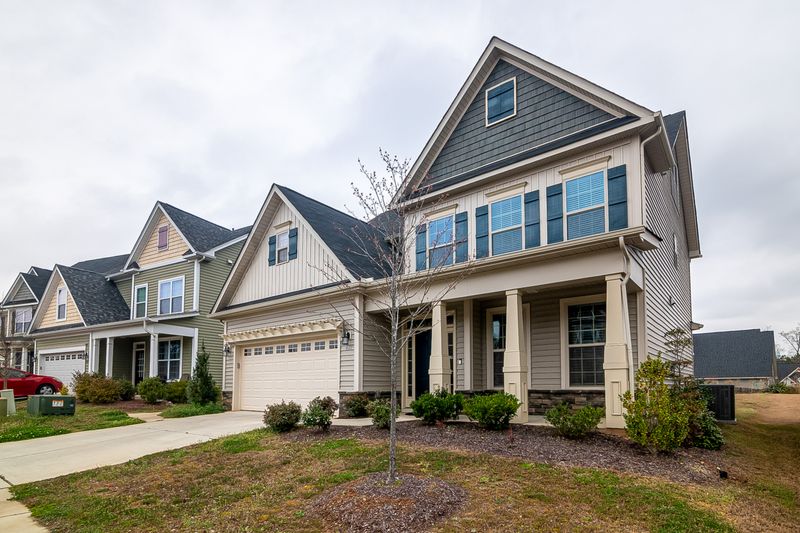
Homes built without brick walls and a tiled roof are rated outside standard models, which narrows the market of insurers willing to quote rather than simply raising the price.

Home insurance is priced around an assumed building: masonry walls under a slate or tiled roof. A house built any other way falls outside that assumption.
What standard construction means to an underwriter
The phrase describes materials rather than quality. Brick, stone or block walls with a pitched roof of slate, tile or concrete is the reference case models are built on.
Timber frame, steel frame, concrete panel, cob, thatch and flat-roofed construction all sit outside it. So does a standard house with an extension built differently.
The classification is not a judgement about the home. It records that the insurer's loss data for that building type is thinner and behaves differently.
Why the risk profile actually differs
Different structures fail in different ways. Fire spread, water ingress, storm resistance and repair method all vary with the materials, which changes both frequency and severity of claims.
Repair cost is often the larger factor. Specialist trades, matching materials and longer works push the cost of a modest loss well above the equivalent in a masonry house.
Flat roofs and thatch attract particular attention because their expected life and failure modes are well understood and comparatively short.
The market narrows before the price rises
Many insurers decline non-standard risks outright, because their automated pricing has no reliable rate for them. The application is refused rather than loaded.
What remains is a smaller set of insurers who underwrite these properties manually or specialise in them. Competition is thinner, which affects price independently of the risk.
This is why comparison quotes can disappear entirely once a construction question is answered accurately. The mechanism is appetite, not penalty.
Declaration is what protects the cover
Construction type is a material fact. Describing a timber-framed house as standard misstates the basis on which the policy was priced, whatever the intention behind it.
The consequence appears at the claim, when a surveyor records what the building is made of. An insurer may then adjust the settlement or treat the contract as unenforceable.
Where the construction is uncertain, a survey or the property deeds usually resolve it. Recording the answer in writing at inception is the cheapest step available.
Listed and heritage buildings add a second layer
Protected buildings must be repaired using specified methods and materials, which raises rebuild cost far above market value and often above a standard sum insured.
Consent requirements also lengthen a claim, because works cannot proceed until an authority approves them. Alternative accommodation limits interact with that delay.
Construction classifications, appetite and heritage rules vary by insurer and jurisdiction and change over time. The wording and schedule in force govern what is covered.
Questions readers ask
Does the wind speed have to be recorded at my house?
No, and it rarely is. Insurers use the nearest available station, which is why local variation is a reasonable point to raise.
Are fences ever covered for storm?
Sometimes, on wider policies or as an add-on, but the standard position across many markets is that storm damage to fences is excluded.