Home & Contents
Flood cover, flood zoning and the pools that make it available
Flood is the peril where private insurance most often stops working on its own, which is why several countries have built shared schemes.

Everything here earned its place by changing an outcome. Nothing about flood cover is included to round the number up.
What matters most
- Flood risk is concentrated and correlated, which makes it hard to pool commercially.
- Several countries operate public or industry-backed flood schemes to keep cover available.
- Flood history attaches to the property and is disclosable on future applications.
Why flood breaks ordinary pooling
Insurance works when losses are independent, so a few claims are funded by many premiums. A flood damages every property in an area at once, which means claims arrive together and premiums do not. Insurers respond by pricing high-risk addresses at their true expected cost, which can exceed what anyone will pay.
That is not a failure of goodwill; it is what happens when a risk is correlated rather than random.
How shared schemes work
Several countries have created industry pools, state-backed reinsurance or mandatory add-ons to spread flood losses across all policyholders. The mechanisms differ: some cap what a household pays and reinsure the excess, some add a levy to every policy. The common design is a cross-subsidy from low-risk to high-risk addresses, made explicit rather than accidental.
Whether such a scheme exists where you live, and what it covers, is a question for your own regulator or insurance body.
Zoning is a starting point, not an answer
Public flood maps show modelled risk at an area level and often miss surface water and drainage failure. Insurers use finer address-level data including claims history, ground level and defences. A property in a mapped flood zone can be cheap to insure and one outside it can be expensive, which surprises people.
The insurer's view is the one that determines availability and price.
What a flood claim involves
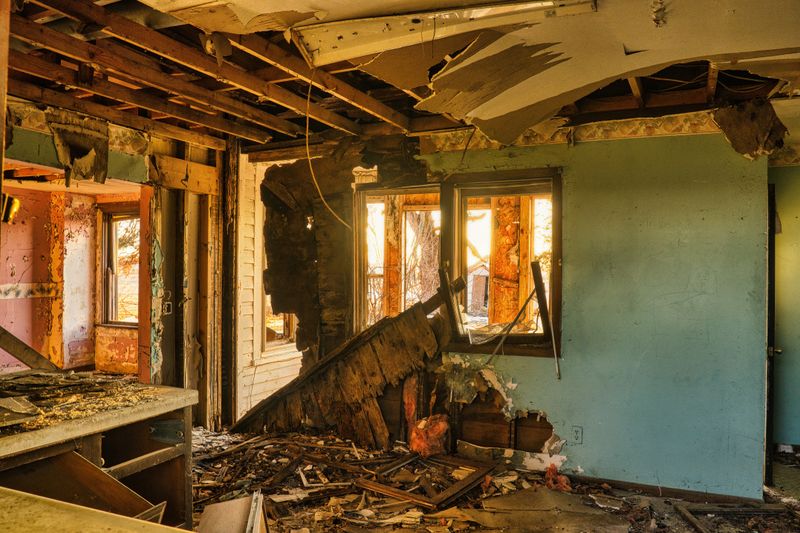
Drying a flooded property typically takes months, and reinstatement usually cannot begin until moisture readings are acceptable. Alternative accommodation cover is therefore one of the most important benefits in a flood-exposed policy, and its limit is worth checking. Contents at low level, floors, plaster and electrics are the usual losses, and the settlement basis for each varies.
Resilient repair, meaning reinstating with materials that recover better, is increasingly offered and sometimes funded.
It follows the property
A flood claim is recorded against the address and is disclosable on future applications by any owner. That affects resale, because a buyer needs to be able to insure the property to obtain a mortgage in most markets. Documenting mitigation work, defences installed and any scheme membership is what makes the next insurance conversation possible.
In practice, property flood resilience measures sometimes reduce premium and always reduce loss.
Adjust the size of it until it is something you would actually do tired.
Before you buy or renew
Ask whether flood is included, excluded, or subject to a separate and much larger excess. A high flood-specific excess is a common way of technically including a peril while limiting exposure to it.
Where it helps most, check the alternative accommodation limit and the period it runs for, since months of it is expensive. Anything address-specific belongs with an insurer or broker who can see the actual data for that property.
Everything above, in order of what to do first
- Why flood breaks ordinary pooling. Insurance works when losses are independent, so a few claims are funded by many premiums.
- How shared schemes work. Several countries have created industry pools, state-backed reinsurance or mandatory add-ons to spread flood losses across all policyholders.
- Zoning is a starting point, not an answer. Public flood maps show modelled risk at an area level and often miss surface water and drainage failure.
- What a flood claim involves. Drying a flooded property typically takes months, and reinstatement usually cannot begin until moisture readings are acceptable.
- It follows the property. A flood claim is recorded against the address and is disclosable on future applications by any owner.
- Before you buy or renew. Ask whether flood is included, excluded, or subject to a separate and much larger excess.
The takeaway
Check for a flood-specific excess. That number, not the flood map, tells you what your insurer thinks.
Small and repeatable beats ambitious and abandoned, almost every time.
Questions readers ask
Is flood always included in home insurance?
Not always. It can be excluded, or included with a separate excess many times the standard one. Check the schedule for a flood-specific excess before assuming you are covered.
Does a flood scheme exist in my country?
Arrangements vary enormously, from state reinsurance to industry pools to nothing at all. Check with your national insurance association or regulator, as this is one of the least transferable areas of insurance.
Also by Rhiannon Blake
- The exclusions page is the policyMaking a Claim
- Why a claim gets declined, in order of frequencyMaking a Claim
- The excess is the most under-used lever on a policyMotor
- Term life cover is simple, and that is the pointLife & Income