Motor
Electric cars ask questions motor policies answer awkwardly
The battery, the cable and the charge point sit between three different policies. Deciding which one responds is not always obvious.

Treat the sections below as a sequence. With electric vehicle cover, getting the early decisions right makes the later ones much easier.
Before you start
- A leased battery may belong to a third party and needs specific mention.
- Charging cables raise both theft and liability questions while in use.
- Battery damage can turn a modest collision into a total loss.
The battery is not always yours
Some electric vehicles were sold with the battery leased separately, so the most expensive component belongs to another company. Where that is the case, the lease agreement usually requires the vehicle to be insured on terms that protect the battery owner. Insurers handle this by noting the interest of the lessor, which is a straightforward step but must actually be requested.
If the battery is owned outright it forms part of the vehicle value, and its condition affects any total-loss valuation. Check which arrangement applies to your car before assuming the standard policy wording deals with it adequately.
Cables, theft and trip hazards
Charging cables are valuable, portable and frequently stolen, and not every motor policy treats them as part of the vehicle. Some wordings cover accessories in or on the vehicle, while others require cables to be specified or covered elsewhere. A cable running across a pavement creates a liability exposure if somebody trips, and that is a third-party injury claim.
Motor liability generally covers use of the vehicle, but whether a stationary charging cable counts is not always clear cut. Household liability may respond where the charging happens at your own property, which is a different policy and a different limit.
The home charge point
A wall-mounted charge point is usually treated as part of the buildings, so damage to it belongs on the home policy. Theft of a charge point, or damage caused by its installation, therefore raises questions for a home insurer rather than a motor one.
Insurers increasingly ask whether installation was carried out by a qualified electrician to the applicable standard. Fire or damage caused by faulty installation can lead to a dispute between the insurer and the installer, with you in between. Keeping the installation certificate is the simplest protection against that argument going badly.
Repairs and total losses
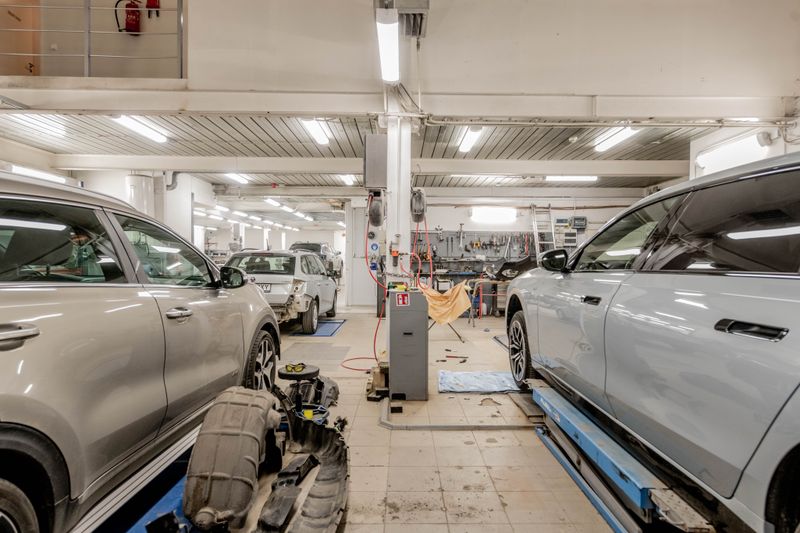
Electric vehicles require specialist repair facilities, and the network of approved repairers is thinner than for combustion cars. Damage near the battery pack often triggers precautionary replacement, because assessing internal damage is difficult and risky.
Put simply, a battery pack can represent a very large share of the vehicle value, so that decision frequently produces a total loss. Some insurers apply longer quarantine and storage procedures for damaged packs, which lengthens the claim considerably.
The practical effect is that a moderate collision can end the vehicle rather than merely damaging it.
Fire and storage questions
Damaged lithium batteries carry a small but genuine risk of thermal runaway, sometimes days after an impact. That risk shapes how insurers store recovered vehicles and how quickly they will release one for inspection. It also explains why some storage providers and car parks have imposed restrictions on damaged electric vehicles.
Nothing here suggests these vehicles are unusually dangerous overall, since fire statistics are still developing and contested. It simply means the claims process has extra steps, and expecting them prevents frustration at the delay.
None of this is a substitute for talking to a clinician if something feels wrong.
What to ask your insurer
Ask whether the battery is covered when leased and whether the lessor interest needs recording on the policy. Ask whether charging cables, adapters and portable chargers are covered, and whether they must be specified.
On an ordinary week, ask how the insurer handles battery damage assessment and whether it uses manufacturer-approved repair facilities. Ask what happens to the vehicle valuation if battery health has degraded, since that is now part of a used car value. Practice varies widely and is changing quickly, so confirm current terms with your own insurer rather than relying on general accounts.
The takeaway
Three components decide electric vehicle claims: who owns the battery, where the cable was, and who installed the charge point.
Small and repeatable beats ambitious and abandoned, almost every time.
Questions readers ask
Does a normal motor policy cover an electric car?
Most now do, but the treatment of leased batteries, cables and charge points varies enough to be worth confirming explicitly.
Who insures a home charge point?
Usually the home policy, as a fixture, though some motor policies include limited cover. Check both rather than assuming either.
Also by Bao Tran
- The average clause: how underinsurance shrinks a small claimHome & Contents
- Theft claims and the words forcible and violentHome & Contents
- Working from home changes what you must tell your insurerHome & Contents
- Landlord and tenant: who insures what in a rented homeHome & Contents